REVIEW · PORTO
Porto Douro River Cruise With Port Wine – Daytime or Sunset
Book on Viator →Operated by BBDouro · Bookable on Viator
Few hours, big payoff.
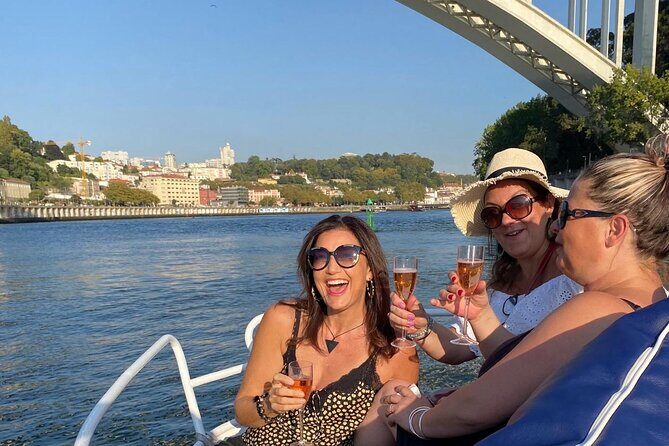
This 2-hour Douro River cruise from Vila Nova de Gaia mixes real scenery with a glass of port wine while a crew points out what you’re seeing. I like that you’re out on the water fast, so you get a different angle on Porto’s bridges, churches, and river life without doing the steep street marathon. I also like the simple comfort of a small group boat experience that still feels special, with crew members who’ll talk you through the city as you go. One drawback to keep in mind: depending on the conditions, you may not get the full sail-and-sunset fantasy you imagined, since you could be on a smaller sailboat and may motor at times.
The route is built for views. You’ll slide past major landmarks on both sides of the river, then out toward the estuary where birds are part of the show. If you’re the type who wants big city walking and ticketed museum time, this one can feel short; if you want a break and a strong “Porto from the water” moment, it hits the mark.
In This Review
- Key points before you go
- From Marina da Afurada to the Douro River: what makes this cruise worth it
- What you’ll actually do: a clear look at the stops and what to notice
- Stop 1: Douro River views (wine caves, churches, rabelo boats)
- Stop 2: Douro Marina (a modern waterfront hub)
- Stop 3: Afurada edge-of-river perspective (Centro Interpretativo)
- Stop 4: Ponte da Arrábida (the bridge that connects Porto to Gaia)
- Stop 5: Museu do Carro Elétrico (historic transport from the river)
- Stop 6: Igreja da Confraria das Almas do Corpo Santo de Massarelos (tiles and tower details)
- Stop 7: New Customs building area (Jean Colson’s mercantile contrast)
- Stop 8: Passeio das Virtudes (vertical terraces and sweeping angles)
- Stop 9: Torre dos Clérigos (the tower that helps you orient fast)
- Stop 10: Cais de Gaia (the wine-cellar waterfront story)
- Stop 11: Barcos rabelos (river transport heritage on the water)
- Stop 12: Praça da Ribeira (UNESCO core energy, from a river angle)
- Stop 13: Jardim do Morro (green terrace views)
- Stop 14: Miradouro Serra do Pilar (the monastery with a circular plan)
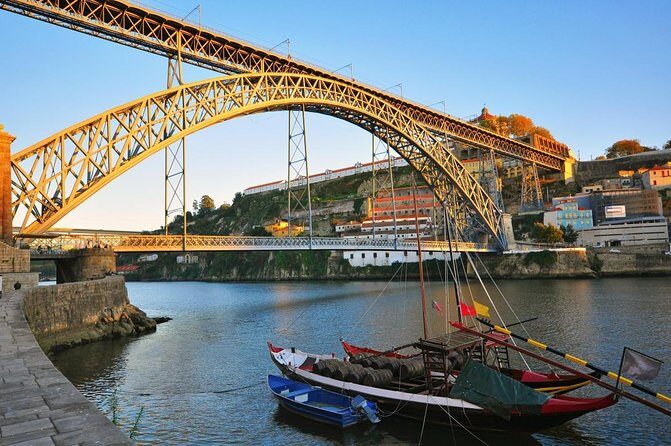
- Stop 15: Dom Luís I Bridge (metal decks, Porto’s iconic link)
- Stop 16: Reserva Natural Estuário do Douro (birds and the estuary vibe)
- Stop 17: Jardim do Passeio Alegre (where river waters meet the Atlantic)
- Daytime vs sunset: choosing the right light for your money
- Comfort and crew: what the best experiences have in common
- Price and value: is $54.42 for 2 hours a good deal
- Getting there without stress: Douro Marina in Gaia is the key
- Who should book this cruise, and who might skip it
- Should you book Porto Douro River Cruise with Port Wine?
- FAQ
- How long is the cruise?
- Where is the meeting point?
- What’s included in the price?
- Is food or lunch included?
- Is hotel pickup or drop-off included?
- What language is the tour offered in?
- Can I bring outside food or drinks?
- Is there a limit on group size?
- What happens if the weather is bad?
- How early should I arrive for check-in?
Key points before you go
- Port wine included with your cruise, so you’re not hunting for a tasting afterward
- Douro Estuary wildlife shows up when timing and weather cooperate, especially for bird spotting
- You see both sides of the river: Porto landmarks and Gaia’s wine-cellar waterfront
- Small-group vibe (max 58), with crew known for friendly, chatty hosting
- Sunset option can get chilly, and blankets are often part of the comfort plan
- Check your exact meeting spot at Douro Marina in Gaia, not the Porto waterfront
From Marina da Afurada to the Douro River: what makes this cruise worth it
This is one of those Porto activities that feels like a reset button. Instead of climbing streets for hours, you get a scenic water route in about two hours, plus a glass of port wine to make it feel like you actually planned something.
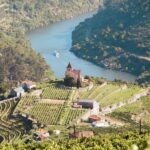
The big value here is perspective. From the deck you can see Porto and Gaia as a single river story: the historic heart of Porto on the north bank, the wine world and shipyards on the south bank, and the estuary that transitions into the wider Atlantic. That’s hard to replicate from street level, especially if you’re tired of stairs.
You’ll also get a guided format without it turning into a lecture. The stops are framed as landmarks you’ll view along the way, and that matters because Porto’s best details show up when you can look from the right distance and angle. On a boat, the bridges and churches stop being “postcard backdrops” and start making structural sense.
More Douro River cruises in the Douro Valley & northern Portugal

What you’ll actually do: a clear look at the stops and what to notice
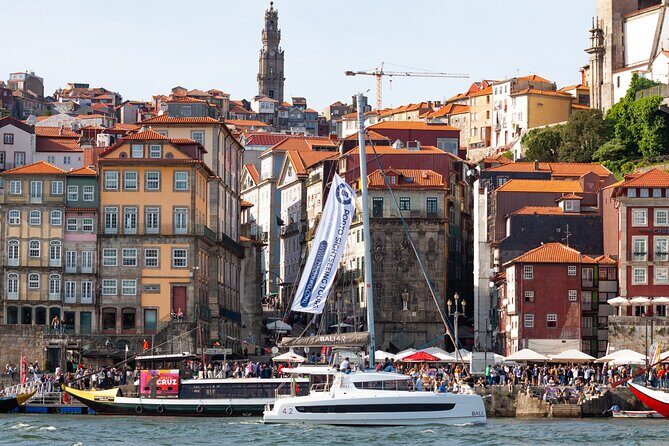
Think of this as a moving panorama with a port break. You’re not hopping between far-flung neighborhoods; you’re taking the river corridor, so the order of what you see stays logical even if you’re new to Porto.
Stop 1: Douro River views (wine caves, churches, rabelo boats)
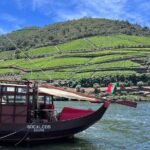
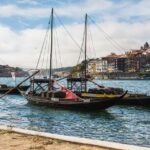
Right after you set off, you get the iconic Douro river scenery: the area associated with wine caves, plus views tied to the river’s historic role in transporting port wine. Keep your eyes open for the river’s working-story landmarks, including the Rabelo boats that used to carry barrels downriver.
This is also where you start spotting the “how Porto grew” angle. The river wasn’t a backdrop. It was the highway.
Potential drawback: if you’re expecting tons of stop-and-photo time, this part moves at cruise speed. It’s built for viewing, not lingering.
Stop 2: Douro Marina (a modern waterfront hub)
As you cruise, you’ll pass the Douro Marina, which opened to the public in February 2012. It’s a substantial waterfront with capacity for a large range of vessels, and the area includes repair and maintenance facilities, plus shops and restaurants.
Why you should care: Marina districts tell you what the river is doing today, not just what it did in the port-wine era. You’re seeing the Douro as a living system: commerce, leisure, and navigation.
Stop 3: Afurada edge-of-river perspective (Centro Interpretativo)
Afurada sits near the mouth of the Douro. It’s historically tied to fishing, and the little interpretive area reflects that edge-of-the-river identity.
From the boat, this stop gives you a “river meets ocean” feeling. If you’re doing a sunset cruise, this is often where the atmosphere starts to change.
More sunset cruises & tours in the Douro Valley & northern Portugal

Stop 4: Ponte da Arrábida (the bridge that connects Porto to Gaia)
The Arrábida Bridge is an arch bridge linking Porto to Vila Nova de Gaia. It matters because it’s part of the modern bridge network that helped handle increasing traffic needs compared with older crossings.
Look for the scale and shape as you pass. From water level, arch bridges feel less like geometry and more like engineering you can trace with your eyes.
Stop 5: Museu do Carro Elétrico (historic transport from the river)
You’ll pass the Tram Museum area. The tram museum preserves electric cars and other transport history in a building that used to be a thermoelectric plant for the city’s early electric vehicles.
On the cruise, you’re mostly seeing the exterior context. If you want to get inside, you’d do that as a separate add-on.
Stop 6: Igreja da Confraria das Almas do Corpo Santo de Massarelos (tiles and tower details)
This church is known for a distinctive facade with tiled coverage and architectural segmentation. It’s the kind of building that can look flat from a sidewalk, but from the water you can catch how the structure is organized.
If you like details, keep your phone ready for a clean view as you glide past.
Stop 7: New Customs building area (Jean Colson’s mercantile contrast)
You’ll also see the old-meets-new contrast of Porto’s river architecture. The New Customs building, designed by French architect Jean Colson, represents a later mercantile boom along the Douro.
It’s known for mixing iron with other materials and for major architectural awards tied to its role as a congress center. Even if you never enter, this stop helps you understand why Porto has such varied styles squeezed into a small area.
Stop 8: Passeio das Virtudes (vertical terraces and sweeping angles)
The Virtudes Municipal Park is described as a vertical garden with terraces down a slope. The payoff from the river: you often get a clear view back up toward Porto’s upper areas, with the river and Gaia in the same frame.
This is a good stop for the “how high Porto actually goes” moment.
Stop 9: Torre dos Clérigos (the tower that helps you orient fast)
The Clérigos Tower, completed in 1763 and designed by Italian architect Nicolau Nasoni, rises above the city and has served as a navigation point as well as a bell tower.
From the boat, you’re not climbing 225 steps, but you still get the benefit: the tower becomes a built-in compass for where you are in Porto.
Stop 10: Cais de Gaia (the wine-cellar waterfront story)
Now you’re firmly in Vila Nova de Gaia territory. This quay is closely linked to port wine because this is where ships anchored and barrels were unloaded for aging in Gaia cellars.
You’ll see a waterfront that was refurbished and became more tourism-friendly, with an award tied to enhancement of public space. Even on a short cruise, this section explains why Gaia is more than a side town. It’s the other half of the port story.
Stop 11: Barcos rabelos (river transport heritage on the water)
Rabelo boats are a historic icon of Douro port wine shipping. They carried barrels between the remote wine region and Gaia before road and rail took over shipping routes.
This is one of the best sections for people who like “why it matters,” not just “what it looks like.” The river’s history comes alive here.
Stop 12: Praça da Ribeira (UNESCO core energy, from a river angle)
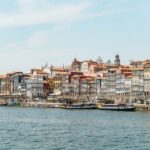
The Ribeira area is one of Porto’s oldest and most typical spots, and it sits in the UNESCO historical center. From the water, you can appreciate the density and river-adjacent layout that powered centuries of commerce.
You’ll also see the Luis I Bridge area from a different angle, plus the Ribeira’s place in local stories.
Stop 13: Jardim do Morro (green terrace views)
Morro Garden near Luís I Bridge is a park space with views over Porto and the Douro River. It’s tied to open views rather than museum time, which makes it perfect for “boat perspective” sightseeing.
If you’re imagining a relaxed walk later, this is one of the places that gives you a reason to.
Stop 14: Miradouro Serra do Pilar (the monastery with a circular plan)
Serra do Pilar is a UNESCO-listed monastery with an austere 17th-century church featuring a circular plan and hemispherical vault. The location also played roles in major historic conflicts, including Napoleonic invasions and later liberal struggles.
On the cruise you’re viewing the setting and architecture shape, not doing a full interior visit, but it’s still an important “why this river bend matters” moment.
Stop 15: Dom Luís I Bridge (metal decks, Porto’s iconic link)
The Dom Luís I Bridge is the big one: a metal bridge with two decks connecting Porto and Vila Nova de Gaia, completed in 1888.
From the river, you can actually see how the upper and lower levels interact with the city layout. It stops being a landmark and becomes an actual piece of infrastructure you can understand.
Stop 16: Reserva Natural Estuário do Douro (birds and the estuary vibe)
Here’s the natural highlight. The Douro Estuary Nature Reserve protects areas near Afurada and includes places like Cabedelo and São Paio Bay. The focus is on birds that live or migrate through the East Atlantic Route, and the visit can be made via a suspended walkway.
From the water, the key is the mood shift. The river opens up toward the mouth, and you notice the wider ecological feel.
Practical note: wildlife spotting depends on season and weather. Don’t plan this as guaranteed bird-ballet time, but it’s worth paying attention.
Stop 17: Jardim do Passeio Alegre (where river waters meet the Atlantic)
Passeio Alegre Garden is a late-19th-century public garden with old trees, shade, and a waterfront setting where the Douro River meets the Atlantic Ocean. It’s also known for features like the granite turtle fountain designed by Nicolau Nasoni and an outdoor bandstand.
From the cruise, you’ll get the sense of why people hang out here: it’s a visual and atmospheric ending.
Daytime vs sunset: choosing the right light for your money
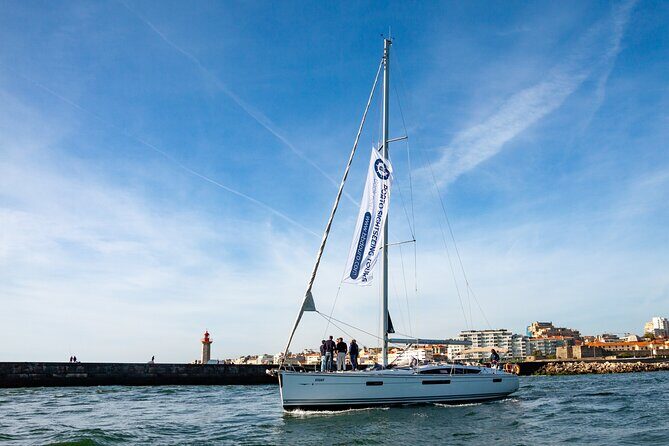
The tour is offered as daytime or sunset. Your best pick depends on what you want most: “clean sightseeing” or “golden-hour vibes.”
Daytime is great if you want sharper visibility for bridges, church facades, and the winery waterfront in Gaia. It’s also easier if you don’t want the chill that often comes after sunset.
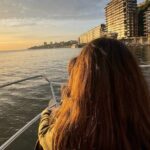
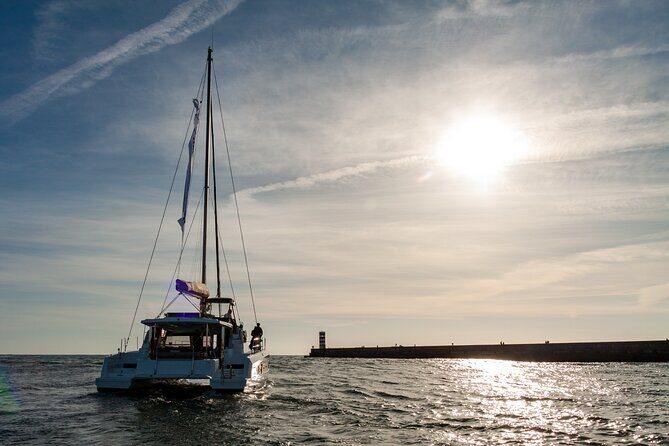
Sunset can be the highlight, especially because the cruise format lets you watch Porto and Gaia change tone as the light lowers. One tip: even in shoulder seasons, it can get chilly out there once the sun goes down. Crew often hands out blankets, but I still suggest you dress for cool wind and plan for time on open water.
Also, manage expectations on how it “sails.” This is a sailboat, but some conditions mean you might be motoring with sails down, with a quiet ride that still feels peaceful.
Comfort and crew: what the best experiences have in common
What people love most isn’t just the view. It’s the human factor.
In the feedback, crew and captains get praised for being friendly and warm, and for answering questions about Porto and the river. Names that come up include Fernando, Miguel, Junior, Lorraine, Hugo, Phillip, and Mariana, with passengers noting that the guides make you feel at ease on the water.
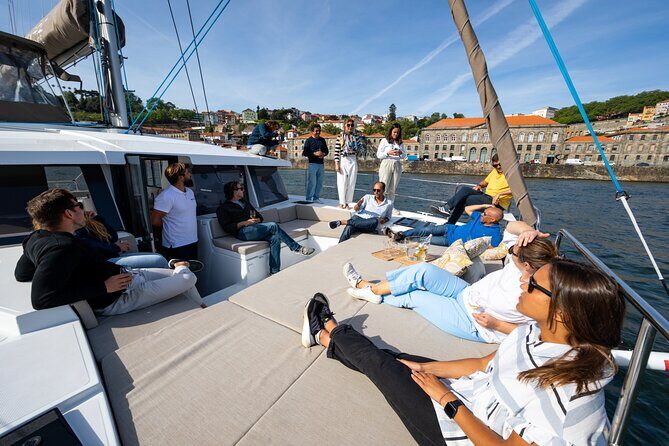
You’ll also see a recurring theme: comfort and care. Blankets are mentioned, and one review even notes that they let a passenger pilot the boat for a moment. That’s not something you should assume, but it tells you the crew likes to turn sightseeing into a memory.
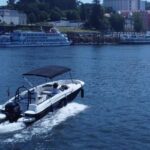
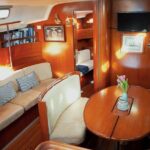
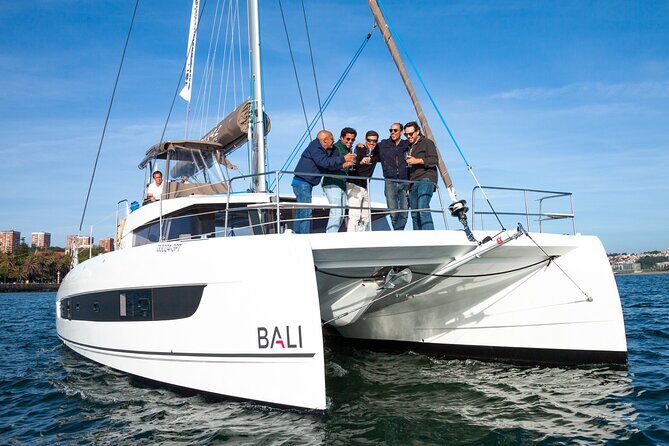
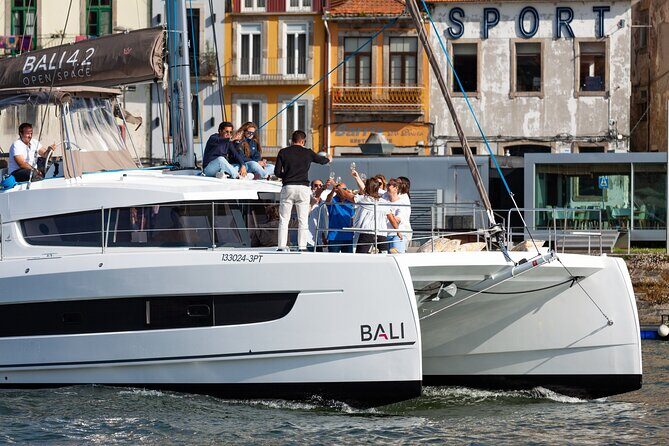
One consideration: there are mixed comments about boat size. Some passengers expected a larger catamaran-like boat based on pictures, but found a smaller sailboat. If motion sickness is an issue for you, you may want to ask what boat you’re likely to be on for your departure time.
Price and value: is $54.42 for 2 hours a good deal
At about $54.42 per person for roughly 2 hours, the value hinges on what you get bundled in:
- Boat tour on a scenic river route with Porto and Gaia landmarks
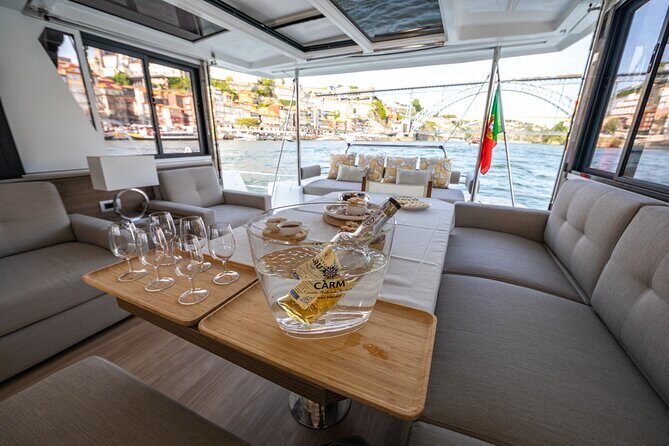
- A glass of port wine included
- Guided hosting from a crew that tends to explain what you’re seeing
You’re not paying extra for the “views bus.” You’re paying for the water angle and the port moment, which is hard to recreate cheaply on your own in a short time window.
This is also a good value if you’re using it as a break from walking. Porto’s hills can drain you. Two hours on water can refresh your energy for the rest of your sightseeing day.
Getting there without stress: Douro Marina in Gaia is the key
Meet at Marina da Afurada, at R. da Praia 430, 4400-554 Vila Nova de Gaia. This is in Gaia, not the Porto side of the river.
A common snag is mixing up the Porto waterfront with the correct boarding spot. For check-in, you should look for a skipper identified with BBDouro equipment at the pier gate (often described as pier D gate) and then they’ll guide you to the boat.
If you’re coming from Porto, don’t underestimate the walking time across and along the riverfront. One review noted an hour and a half walk from the Porto side of Dom Luís I Bridge to the marina, so I strongly suggest you use local transport or a short taxi/ride if you’re tight on time.
Who should book this cruise, and who might skip it
This is a smart fit if you:
- Want Porto highlights without the steep stairwork
- Love port wine and want a simple included tasting
- Want short-and-sweet sightseeing that still feels like a real experience
- Plan to do sunset but still want a daytime option in case skies aren’t perfect
You might skip or reconsider if you:
- Need a strict, museum-heavy itinerary with lots of inside visits
- Get motion sick and are sensitive to smaller boats
- Want a guaranteed dramatic sunset in every weather scenario
Should you book Porto Douro River Cruise with Port Wine?
I’d book it if your goal is the classic Porto angle: bridges + churches + wine-cellar waterfront, seen from the water, with a port wine included and a friendly crew. It’s also a strong choice for a half-day rhythm where you want rest without giving up views.
I’d hesitate if boat size matters a lot to your comfort, or if you’re chasing a specific sunset outcome. Weather can change the plan. But when the day cooperates, this cruise is one of the easiest ways to understand why Porto and Gaia belong to the same river story.
FAQ
How long is the cruise?
The tour duration is about 2 hours.
Where is the meeting point?
The meeting point is Marina da Afurada, R. da Praia 430, 4400-554 Vila Nova de Gaia, Portugal.
What’s included in the price?
You get Wi‑fi, a glass of port wine, and the boat tour.
Is food or lunch included?
No. Food and drinks, including lunch, are not included.
Is hotel pickup or drop-off included?
No hotel pickup and drop-off is included.
What language is the tour offered in?
The tour is offered in English.
Can I bring outside food or drinks?
For shared tours, you are not allowed to bring food or drinks from outside. The crew will not permit access.
Is there a limit on group size?
Yes. The tour has a maximum of 58 travelers.
What happens if the weather is bad?
This experience requires good weather. If it’s canceled due to poor weather, you’ll be offered a different date or a full refund.
How early should I arrive for check-in?
You’ll receive confirmation at booking, and you should arrive at the marina for check-in at the pier gate with the BBDouro-identified skipper. The meeting point details are part of the booking information, and it’s important to match that location.