REVIEW · PORTO
Yacht Cruise Excursion to 6 Bridges on the Douro
Book on Viator →Operated by Catita Douro · Bookable on Viator
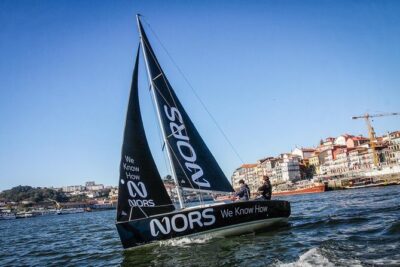
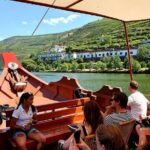
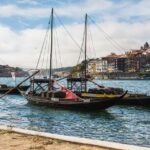
The Douro feels bigger from a yacht. You glide between Porto and Vila Nova de Gaia and get a front-row seat to the 6-bridge sweep that defines this stretch of river, with classic sights like Sé Cathedral and Torre dos Clérigos along the way. I especially like the built-in contrast: landmark-hopping on one side of the river, then those dramatic bridge views as the skyline changes hour by hour.
Two other things I’d highlight for your decision: the small max group size (no more than 8 people) for a calmer ride, and the short pause near Ribeira do Porto and Ribeira de Gaia to actually look up close at the UNESCO riverfront. The one consideration is weather: this cruise depends on good conditions, and if it’s not right, you’ll need to rebook or get a refund.
In This Review
- Key points I’d plan around
- A small-crew yacht on the Douro: why it feels different
- Meeting in Gaia and timing it at 3:00 pm for the best light
- Porto landmarks from the water: what you’ll actually see
- Luís I Bridge and the 10-minute Ribeira stop: the moment that makes it real
- Arrábida and S. João Bridges: views that change with every turn
- Maria Pia, Freixo, and Infante D. Henrique: engineering you can feel
- What the best reviews get right: conversation, wine, and music
- Price and value: is $68.65 per person worth it?
- Who should book this Douro yacht cruise (and who shouldn’t)
- Should you book this 6-bridges Douro yacht cruise?
- FAQ
- How long is the Douro yacht cruise?
- What’s the group size limit?
- Where does the tour start?
- What time does the cruise depart?
- Is mobile ticketing used?
- What if the weather is bad?
Key points I’d plan around
- Up to 8 people means less crowd pressure and more room to move for photos
- 6 bridges in one run: you’ll see Porto’s icons from both city sides and mid-river angles
- A ~10-minute Ribeira break gives you time to take in the UNESCO-listed waterfront
- Wine and music add to the relaxed, lived-in feel (not just sightseeing)
- Mobile ticket makes it easier on the day
- 2 to 3 hours keeps it doable even if you’re juggling a tight Porto schedule
A small-crew yacht on the Douro: why it feels different
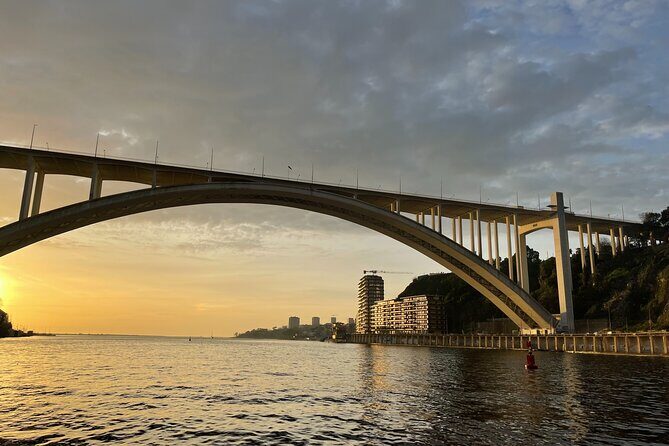
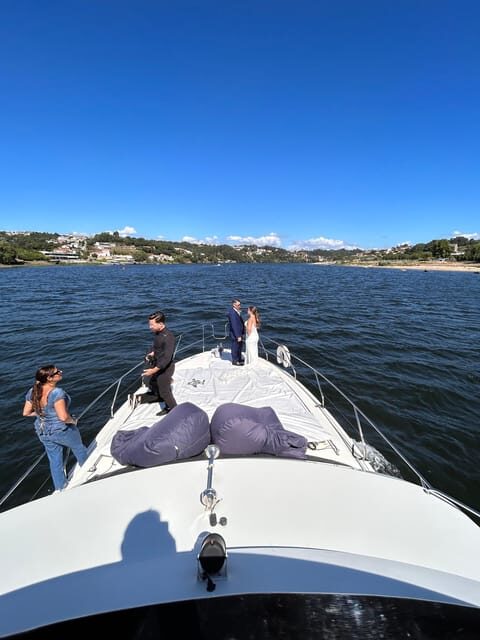
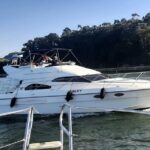
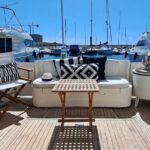
This isn’t a big party boat. With a maximum of 8 travelers, you can actually hear the music and chat without shouting, and you won’t feel like you’re trapped in a shoulder-to-shoulder line. That matters on the Douro because the best moments are often quick: a bridge lines up with a cathedral tower, or the riverfront opens at just the right angle.
I also like that the experience is designed for pairs, families, or friend groups. When a cruise is sized small, families can spread out a bit and couples often get the quieter vibe they’re after. It’s the kind of trip where you can enjoy the ride without treating it like a checklist.
One more practical plus: it’s capped at a short 2 to 3 hours, so you’re not committing your whole afternoon. If you’re staying in Porto or Gaia and want one “wow” experience without wrecking your day, this fits.
More Six Bridges cruises in the Douro Valley & northern Portugal


Meeting in Gaia and timing it at 3:00 pm for the best light
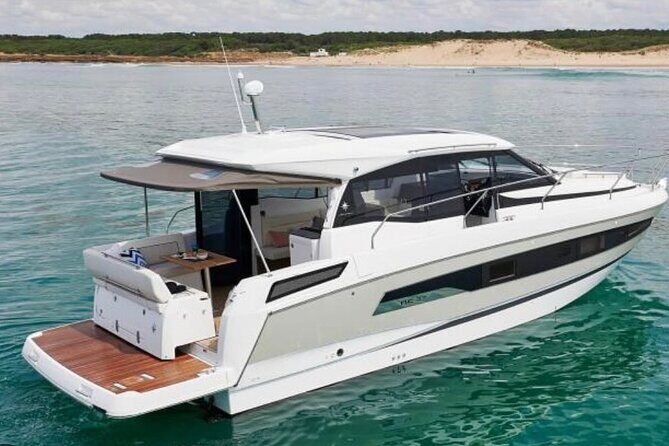
The cruise starts at 3:00 pm from Parking Afurada, R. da Praia 147, in Vila Nova de Gaia. That timing is helpful because you’ll be on the river in the afternoon window when the city colors tend to look good and the bridges become a moving photo backdrop.
You don’t need to build the whole day around it, but you should still arrive early enough to find the right spot and settle in. The cruise is short, and once you’re under way, the best views happen as you pass each landmark and bridge in sequence.
Also check how you’ll get there. The meeting point is noted as near public transportation, which can be a relief if you don’t want to worry about parking. If you’re traveling with service animals, the tour allows them too.
Porto landmarks from the water: what you’ll actually see
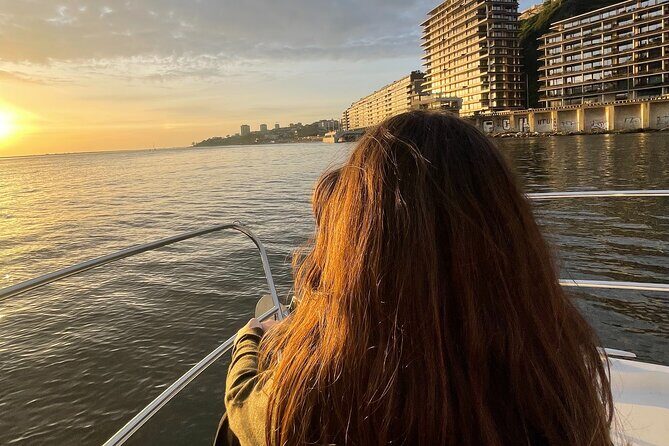
From the river, Porto’s most famous buildings aren’t just pretty backdrops. They become navigation markers, so you can understand how the city hugs the water.
As you sail along, you’ll admire sights like Palácio de Cristal and the Alfândega do Porto area, plus major religious and iconic towers such as the Sé Cathedral and the Torre dos Clérigos. The key advantage here is perspective. On foot, these places can be hard to frame together, because streets and viewpoints limit your angle. On the water, you see the “whole idea” of the city in one sweep.
You’ll also get the riverside character in motion—watching how the waterfront changes as the boat turns. Even if you’ve seen photos already, the scale reads differently when you’re close enough to notice how the architecture sits against the river edge.
If you care about Port wine culture, you’ll pass the Port Wine cellars too. You’re not touring every cellar door on this cruise, but you’re seeing the area tied to one of Portugal’s biggest exports, from the route that historically made transport possible.
Luís I Bridge and the 10-minute Ribeira stop: the moment that makes it real
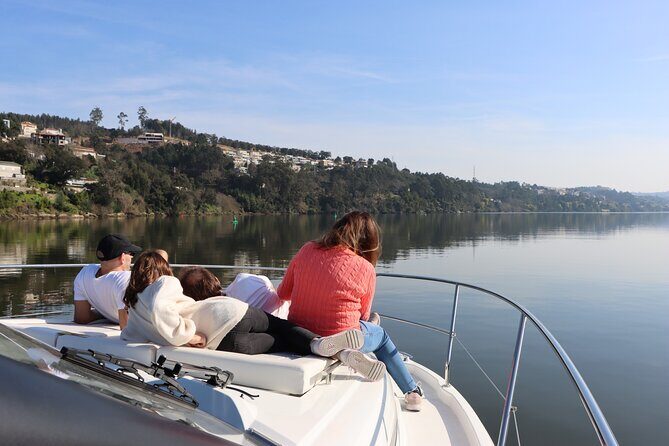
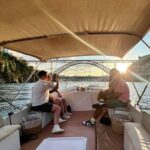
This cruise includes a pass under the Luís I Bridge, which is one of the big visual signatures of Porto. It’s not just a bridge you glide past—you get a strong “urban corridor” feeling because the city wraps around it. As you go under, you’ll see the geometry of the structure and how the skyline layers behind it.
Then comes the short stop near Ribeira do Porto and Ribeira de Gaia, around 10 minutes. This is one of the most valuable parts of the outing because it’s long enough to actually look, not long enough to drag. Ribeira is a UNESCO World Heritage Site, and on the water you can appreciate why: the waterfront looks built for walking and gathering, but from your yacht you also understand how it functions as a riverfront district.
I’d use that time with a simple plan:
- Take photos facing the river, then rotate and take a second set facing the city.
- Look for the way the riverfront curves—your brain connects the geography faster with bridge reflections and building lines.
After this brief pause, the boat keeps moving, so you don’t get stuck in “tour fatigue.” The whole point is a smooth flow of iconic views, capped by one chance to slow down.
Arrábida and S. João Bridges: views that change with every turn
As the yacht heads out toward the central sights, you’ll also pass under the Arrábida Bridge. The advantage of this stop-in-motion is that you’re seeing wide panoramas without needing to hike up to viewpoints. From the deck, bridge openings, river bends, and the city’s river edges land in your frame naturally.
Then you’ll pass through S. João Bridge. This one is important because it’s part of the continuous “bridge story” on the Douro—each crossing feels like a chapter change. The boat route helps you compare the feel of each section of riverfront, instead of treating Porto as a single static skyline.
If you’re the type who likes to learn what you’re looking at, bridges are a fun entry point. You don’t need a textbook. You can simply watch how the river narrows, how the city lines up, and how the skyline shifts as you move under each crossing.
More luxury yacht tours in the Douro Valley & northern Portugal

Maria Pia, Freixo, and Infante D. Henrique: engineering you can feel
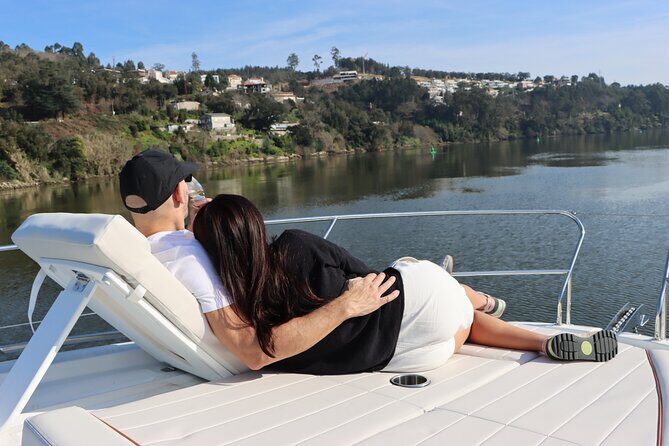
One of the standout segments is passing through Maria Pia Bridge. The cruise info specifically calls out its importance in engineering, and that shows in the experience. Even if you’re not a structural-nerd, you’ll notice how the bridge design reads from different angles as you go under it and then pull away. It feels like the city’s industrial brain—visible, solid, purposeful.
After Maria Pia, you’ll continue with Ponte do Freixo and then the Infante D. Henrique Bridge. Together, the last part of the cruise does something smart: it keeps the visual momentum going while the river transitions from dense city landmarks to more open river sections.
What I like about this sequence is that it gives you multiple “final sets” of photos, not just one. Each bridge changes your background—so if you missed a perfect photo on an earlier crossing, you get another chance right after.
What the best reviews get right: conversation, wine, and music
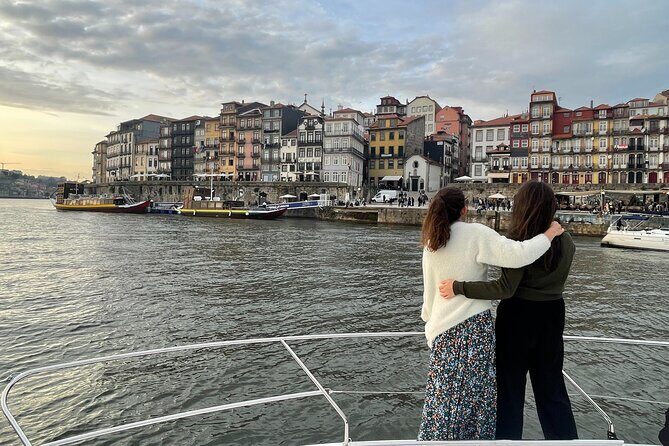
The strongest praise centers on the onboard tone. You should expect a relaxed atmosphere with music and wine and a friendly vibe that makes the time feel more like a good afternoon with new people than a rushed sightseeing task.
That matters on a cruise, because the scenery does the heavy lifting, but the atmosphere decides whether you actually enjoy the ride or just tolerate it. The best version of this tour feels easy: you’re not trapped in a rigid script, and the music gives the whole experience a Portuguese “evening afloat” feel even though it runs in the afternoon.
You’ll also likely enjoy the conversation component. Even without specific guide details provided here, the setup is clearly designed for small-group interaction. In a group of eight, there’s more chance to ask questions and get real answers rather than listening to information piped through a loudspeaker.
Price and value: is $68.65 per person worth it?
At $68.65 per person, this cruise sits in the “pay for comfort and time” category. You’re not getting a full-day itinerary, but you are paying for three things that are hard to replicate on your own:
- A guided route that strings together major Porto and Gaia sights plus six bridges
- Time on the water that saves you from constant walking and viewpoint hopping
- Small-group comfort (maximum 8) with wine and music added in
Two to three hours also helps the value math. If you’re planning your Porto visit around landmarks, this cruise can replace multiple short trips by giving you a single moving overview. The short 10-minute Ribeira stop is a bonus because it adds real time on the UNESCO riverfront rather than only passing it from a distance.
If you’re traveling in a group and want a “shared win,” the small size is even better. If you’re a solo traveler, it’s still a solid value because the format doesn’t feel like you’re lost in a crowd.
Who should book this Douro yacht cruise (and who shouldn’t)
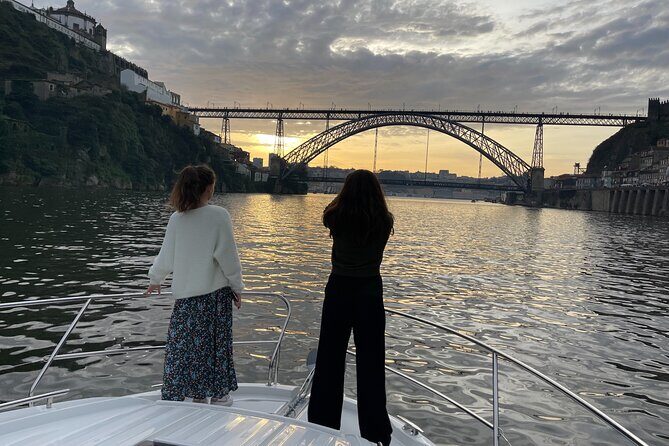
Book this if you want a calm, scenic afternoon with meaningful landmarks and you’re drawn to bridges as part of the story. It’s also a good fit if you like your sightseeing mixed with atmosphere—music, wine, and good conversation—instead of only facts on a phone screen.
This cruise is especially appealing for:
- couples who want a scenic activity without complicated logistics
- families looking for a short outing that’s not all walking
- friend groups that want a shared experience with a small-crew feel
Skip it if you’re planning around a day where weather is uncertain. The experience requires good weather, and the cruise can be canceled due to poor conditions. Since the timing is fixed at 3:00 pm, you don’t want to book it when you have an ironclad non-flexible plan later that afternoon.
Should you book this 6-bridges Douro yacht cruise?
I’d book it if you want the Douro’s big Porto-and-Gaia postcard moments, but in a more personal package than a large tour boat. The mix of key sights—Sé Cathedral, Torre dos Clérigos, Serra do Pilar Convent, the Port wine cellars—and the sequence of bridges (Luís I, Arrábida, S. João, Maria Pia, Freixo, Infante D. Henrique) makes it feel like a focused route, not a random loop.
I’d also book it because it offers that rare combo: a short duration and a small group plus wine and music. That’s a recipe for an easy afternoon that still gives you plenty to talk about back on shore.
If you’re mainly chasing a dense museum-style experience, this probably isn’t your thing. But if you want the Douro to feel personal—right where the cities meet the river—you’ll likely enjoy this one.
FAQ
How long is the Douro yacht cruise?
The cruise runs about 2 to 3 hours.
What’s the group size limit?
The activity has a maximum of 8 travelers, which keeps it relatively small.
Where does the tour start?
You meet at Parking Afurada, R. da Praia 147, Vila Nova de Gaia, Portugal. The activity ends back at the meeting point.
What time does the cruise depart?
The start time is 3:00 pm.
Is mobile ticketing used?
Yes. The tour uses a mobile ticket.
What if the weather is bad?
This experience requires good weather. If it’s canceled due to poor weather, you’ll be offered a different date or a full refund.