REVIEW · PORTO
Porto: Private Tour to the Historic Center in a Classic Car
Book on Viator →Operated by OldTour Porto · Bookable on Viator
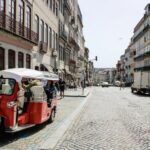
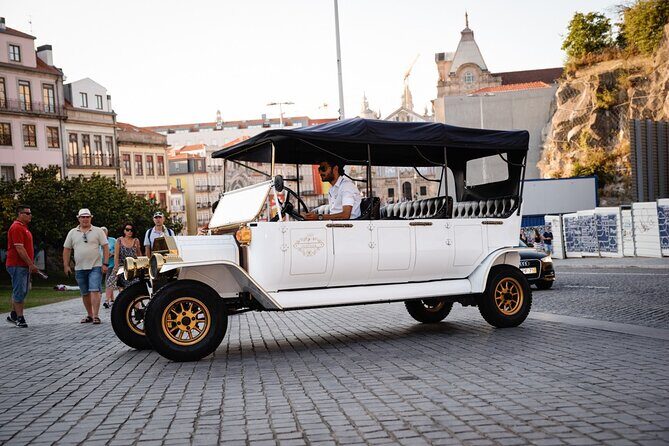
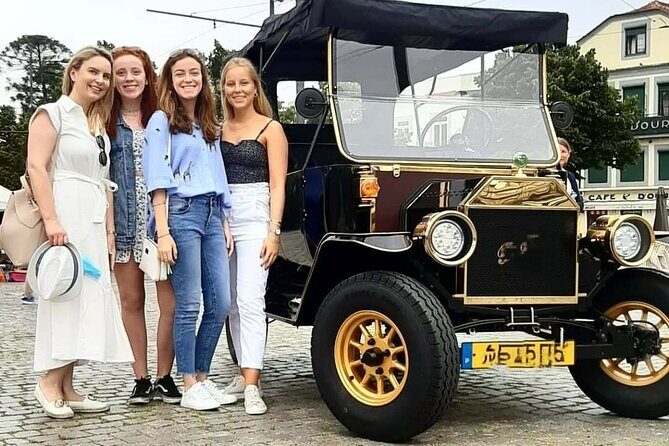
Classic cars make Porto feel like a movie set. This private route in a black or green classic car is built for quick orientation and great photo angles in about 90 minutes.
I love the way the stops balance big scenery with indoor breathing room—starting at the Luís I Bridge and then moving into places like the Infante D. Henrique Museum. I also really like the human touch from guides, including Mariana and João, who stay patient, answer questions, and add context that helps you connect the dots while you’re still in the city.
One thing to plan for: the ride can be bumpy on older roads, and the route can change if there are road closures. Also, hotel pickup isn’t guaranteed for every address; you’ll meet in the historic center, and it helps to know that meeting point in advance.
In This Review
- Key Things You’ll Notice on This Classic-Car Porto Tour
- Why a Classic Car Makes Sense for Porto’s Historic Center
- Luís I Bridge to Open the Route: Porto’s Best First Wow
- Infante D. Henrique Museum: Maritime Facts That Actually Stick
- Palácio da Bolsa and the Arab Room: Trading Power in Moorish Detail
- Porto Customs House on the Douro: River Views and Museum Time
- Sea Forts: São João Baptista and the Cheese Castle Views
- Fortress of São João Baptista
- Castelo do Queijo, the Cheese Castle
- Electric Tram Museum: Getting a Feel for Porto’s Daily Life
- Passeio Alegre Garden and Jardim Calm: Sea Breeze Without the Crowds
- Crystal Palace Gardens: Romantic Paths Built for Leisure
- Value and Timing: Is $39.79 Worth It?
- Should You Book This Private Porto Classic Car Tour?
- FAQ
- How long is the Porto private tour in the classic car?
- Is this a private tour or a shared group?
- Do they offer pickup, and where do we meet?
- What language is the tour offered in?
- Is there a mobile ticket?
- Are service animals allowed?
- Are there entrance fees at the stops?
- What’s included in the museum stops?
- What’s the cancellation policy?
- Do I need to book far in advance?
Key Things You’ll Notice on This Classic-Car Porto Tour
- Luís I Bridge from both the street level and the upper-deck perspective for panoramic river views
- Maritime storytelling at the Infante D. Henrique Museum, with ship models, instruments, and discovery-era maps
- Palácio da Bolsa’s Arab Room—Moorish-style details inside a 19th-century trading landmark
- Douro waterfront atmosphere at the Porto Customs House area, with the museum and river-garden downtime
- Two sea forts: São João Baptista and the Cheese Castle for defenses and dramatic water views
- Gardens + tram history to slow the pace after all that sightseeing driving
Why a Classic Car Makes Sense for Porto’s Historic Center
Porto’s historic center is full of tight streets, sudden turns, and photo opportunities that are hard to manage if you’re on foot or constantly parking. This tour solves that by putting you in a classic car and moving you between standout viewpoints and major sights without wasting time. You get a tight loop that feels like a curated highlight reel, but you still get real moments to stop, look, and take pictures.
I also like that it’s private. Only your group rides along, so your guide can set the pace. If you want an extra minute at a viewpoint or you’re trying to photograph golden-hour reflections on the river, you’re not fighting a bus schedule.
The vibe is casual, too. Even reviews that mention a little bouncing point to the same idea: it’s part of the charm, and guides drive carefully. Just know you’ll be on classic-car time—close to the city, slower in places, and focused on seeing more than you’d likely fit on your own in 90 minutes.
More private Douro tours in the Douro Valley & northern Portugal
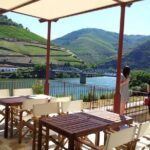
Luís I Bridge to Open the Route: Porto’s Best First Wow
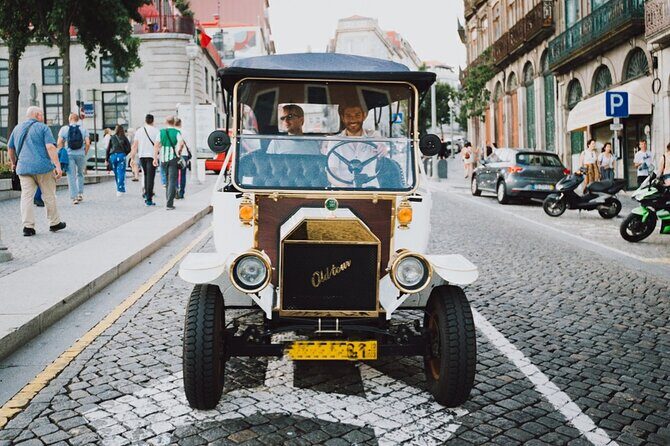
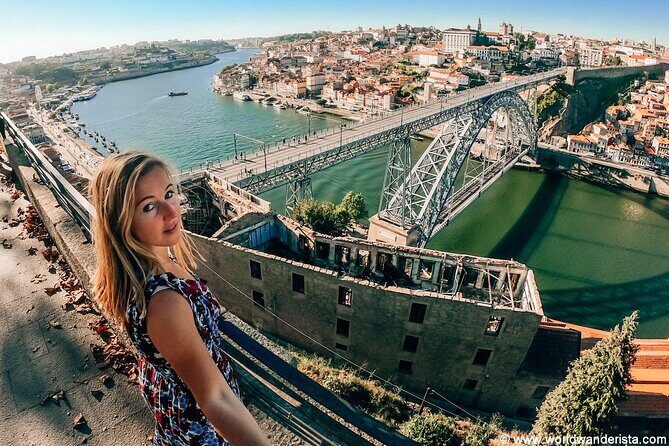
You start with one of Porto’s most recognizable engineering feats: the Luís I Bridge, designed by a disciple of Gustave Eiffel. Crossing it gives you a strong “map in your head” moment—Porto on one side, Vila Nova de Gaia on the other, and the Douro River working as the visual connector.
What makes this stop special is the view stack:
- You get panoramic scenes as the car moves across.
- You can appreciate the riverbanks and the way boats come and go.
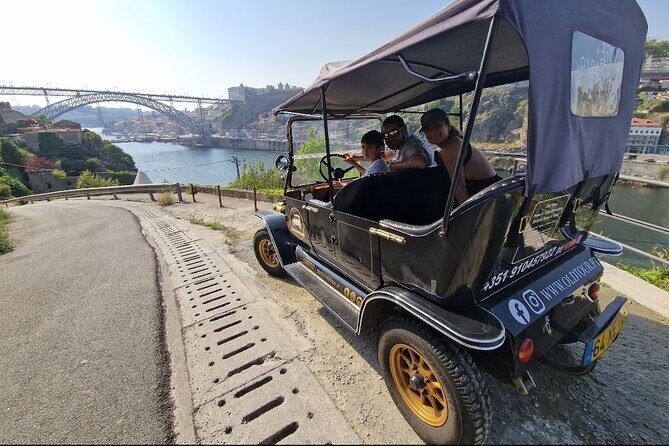
- There’s the upper deck at about 60 meters high, which is a very different viewpoint than street-level walking.
If you’re thinking about photos, this is the place to plan for them. The river reflections can look especially good near sunrise or sunset, when the water looks calmer and colors soften. Even if your timing isn’t perfect, the structure and river context still deliver instant payoff.
Time-wise, it also works as a warm-up. It’s early enough that you’re still fresh, and it sets you up to understand what you’re seeing later—especially how the city developed around the water.
Infante D. Henrique Museum: Maritime Facts That Actually Stick
Next up is the Infante D. Henrique Museum, a focused dive into Portugal’s maritime history and the legacy of the Discoveries. If you’ve ever wondered how a country builds sea power, this museum helps you see the chain: navigation ideas, cartography, exploration, and the tools that made longer journeys possible.
This is the kind of museum that plays well for more than one travel style. If you’re into history, you’ll find models of historical ships, navigation instruments, and maps showing why the sea shaped national identity. If you’re traveling with kids or you just want learning that doesn’t feel like a lecture, the museum’s interactive, educational approach can make the stories easier to follow.
A practical note: because your whole tour is about 90 minutes, this stop is best if you treat it like a curated highlights window rather than an all-day museum plan. You’ll likely focus on the major exhibits and the most visual pieces—maps, instruments, and the ship models—so you leave with clear takeaways, not exhaustion.
Palácio da Bolsa and the Arab Room: Trading Power in Moorish Detail
Palácio da Bolsa is one of Porto’s big architectural headliners. It’s a 19th-century neoclassical building that originally served as the Stock Exchange, so it’s tied directly to the city’s commercial story—how trade shaped wealth, influence, and the look of Porto.
The standout inside is the Arab Room, famous for Moorish-inspired decoration and detailed craftsmanship. Even if architecture isn’t your main interest, this room gives you something rare: a full sensory sense of how different cultural styles can travel and transform in a European city tied to global commerce.
Here’s why I think this stop is valuable for a “first pass” Porto tour: it turns Porto from a bunch of landmarks into a connected story. Bridge, museum, trading palace—suddenly you’re seeing themes: water routes, navigation, ships, commerce, and city identity.
Also, the palace can host temporary exhibitions and cultural events, so depending on when you go, you might see an extra layer of activity alongside the permanent rooms. That means your experience can feel a little different each visit.
Porto Customs House on the Douro: River Views and Museum Time
After the palace, you’ll head to the Porto Customs House, another impressive 19th-century neoclassical building on the riverbanks. Its original job was to handle taxes and manage trade, which makes it a natural partner to the Stock Exchange site you just saw.
Today it houses the Porto Museum, so you get a museum experience that’s grounded in place—Porto’s cultural and social history shown in a building built for regulation and commerce. Even if you don’t go deep into every exhibit (and you probably won’t in 90 minutes), the setting helps you understand why the museum belongs here.
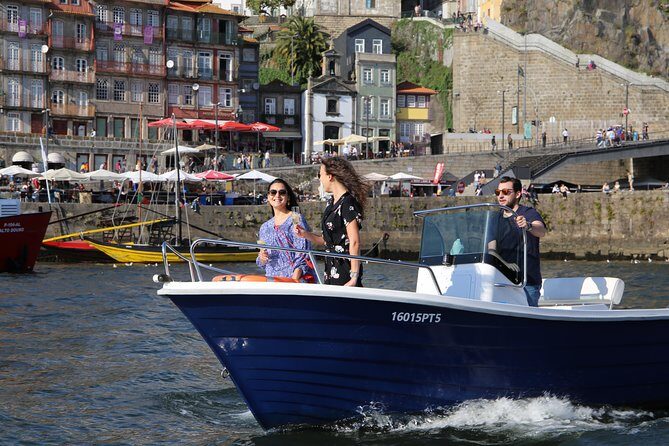
Don’t rush past the exterior and nearby gardens, either. The surrounding riverfront area is a good spot to reset: sit for a moment, take in the views of the Douro and the bridges, and catch your breath between stops.
If you’re the type who likes to decide what to return for later, this is a great “sifting” point. You’ll see what themes you care about—trade, daily life, maritime history—and then you can choose your next visit accordingly.
Other private tours in Porto






Sea Forts: São João Baptista and the Cheese Castle Views
This classic-car route doesn’t only focus on the inner city. It also gives you time near the Atlantic edge with two forts—each built for defense, each framed by water, and both great for photos.
Fortress of São João Baptista
São João Fort is a 17th-century fortress facing the Atlantic Ocean. It was built to protect Porto from maritime invasions, and walking the walls (or even just taking in the feel of the site) gives you a real sense of how vulnerable coastal cities needed to be.
It also delivers views over the Douro estuary. The emotional effect is what you expect: waves nearby, sky wide open, and the coastline making sense in a way it doesn’t from far away.
Worth knowing: the fort stop lists admission ticket not included, so you should plan for that if you want to go inside or do the full site experience.
Castelo do Queijo, the Cheese Castle
The Cheese Castle (Fort of São Francisco do Queijo) is next to the sea and dates to the 16th century. It was built to defend against maritime invasions and pirate attacks. The structure’s shape is part of the charm—people connect it to the look of a Serra cheese.
Today, locals and tourists visit for the walls and sea views. The interior spaces can be used for exhibitions and cultural events, so you may catch a seasonal program depending on timing.
Both forts work well in a short tour because they combine scenery + history. You don’t need long explanations to understand why they matter; the coastline does the teaching for you.
Electric Tram Museum: Getting a Feel for Porto’s Daily Life
Porto isn’t only about monuments. It’s also about how people moved around the city every day, and the Electric Tram Museum tells that story.
The museum sits in a former electric tram factory. Inside, you’ll see a collection of trams that operated on city streets since the 19th century, plus supporting materials like historical models, photographs, and documents tracing how public transport evolved and what that meant for daily life.
This stop is a nice contrast after forts and bridges. It’s indoors, it’s visual, and it helps you understand Porto as a working city, not just a postcard. If the museum offers rides on restored trams during your visit, that can be a fun, low-pressure bonus—plan to ask your guide what’s running that day, since museum operations can vary.
Passeio Alegre Garden and Jardim Calm: Sea Breeze Without the Crowds
A break helps, and Passeio Alegre Garden is a good one. Located near the mouth of the Douro River, it’s a 19th-century garden made for strolling, shade, and letting your brain reset between sights.
What you’ll enjoy here:
- Winding paths through mixed plantings, including palms and flowering shrubs
- Benches placed for pausing and people-watching
- Ornamental fountains and classical statuary
- A general feel of calm that still keeps you close to the waterfront atmosphere
It’s also one of those places that suits multiple travel styles. If you want a quick stretch, you’ll get it. If you want a short pause for photos without a crowd scene, this garden can deliver. And if you’re traveling with family, it’s a friendly spot for a picnic-style break, since it’s known for that kind of relaxed use.
The stop is listed as free, so you’re not paying extra to slow the pace.
Crystal Palace Gardens: Romantic Paths Built for Leisure
To close out the nature-side part of the route, you visit the Crystal Palace Gardens. These date back to the 19th century and were created as part of the story around the Crystal Palace—a glass and iron structure inaugurated in 1865.
The gardens were designed by English landscape architect Edmundo de Melo e Castro. Think European Romantic style: lakes, hills, small pavilions. The layout is meant to feel like you’re drifting through viewpoints rather than walking one straight line.
In a tour full of man-made structures—bridges, palaces, fortifications—this is a helpful reset. You’re not just seeing Porto. You’re feeling how the city spaces itself: viewing zones, meeting places, and leisure designed for locals as well as visitors.
Like Passeio Alegre, this garden stop is listed as free, which makes it a smart use of your time. You get a real atmosphere shift without burning your budget.
Value and Timing: Is $39.79 Worth It?
For $39.79 per person with about 1 hour 30 minutes of ride-and-stop time, the value hinges on what you want from Porto right now.
If you want:
- a fast orientation through major highlights,
- a way to see multiple neighborhoods without logistics stress,
- and guide talk that helps you understand what you’re looking at,
…then this is good value. You’re paying for car access, route planning, and interpretation, not just for a list of monuments.
If your goal is deep museum time or slow wandering, you might feel rushed. That’s not a flaw in the tour; it’s just how the structure works. In a tight schedule, you’ll get the best parts of each stop—then you’ll likely choose later returns for the places you want to explore longer.
One more practical value point: the private format makes the 90 minutes feel less “assembly line.” Guides like Mariana and Ana stood out for staying patient and explaining clearly, which makes the whole experience feel more like a conversation than a script.
Should You Book This Private Porto Classic Car Tour?
Book it if you like photo-driven pacing, want a quick understanding of Porto’s maritime and trading themes, and you value having a guide who can adjust in the moment. The classic-car format is a big part of the fun, and the route hits both big icons and calmer stops like gardens.
Skip it (or at least adjust expectations) if you’re sensitive to a bit of uneven ride or if you want lots of time inside museums and forts. Also, make sure you’re clear on where you’ll meet in the historic center, because hotel pickup may depend on distance, and road closures can affect the exact flow of the route.
Overall, it’s a strong way to get your bearings fast and leave Porto knowing what to return for next.
FAQ
How long is the Porto private tour in the classic car?
It runs about 1 hour 30 minutes.
Is this a private tour or a shared group?
This is a private tour/activity, so only your group participates.
Do they offer pickup, and where do we meet?
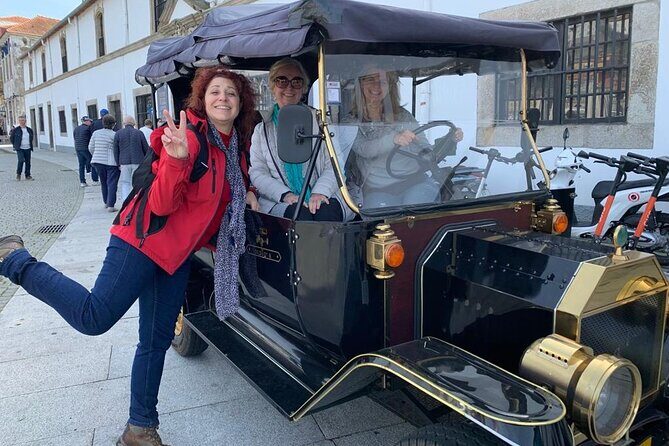
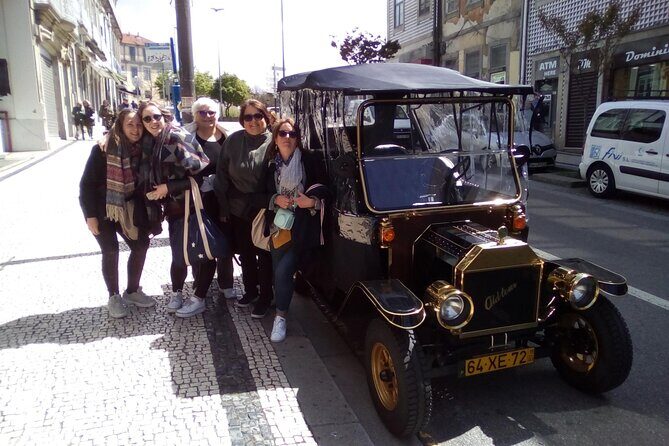
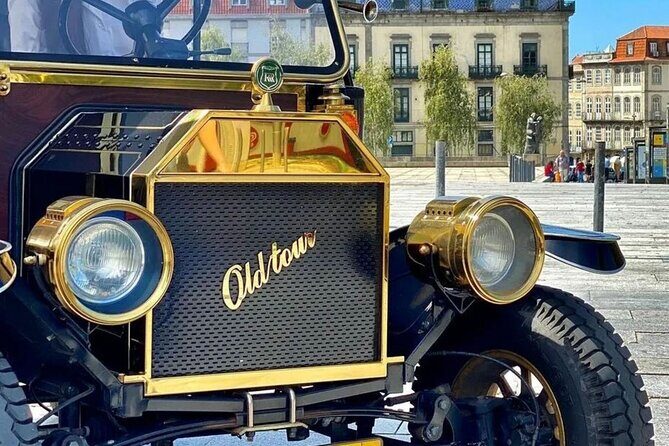
Pickup is offered, and the meeting point is anywhere in the historic center area. Your guide will be identified by the name Oldtour, and the classic car is either black or green.
What language is the tour offered in?
The tour is offered in English.
Is there a mobile ticket?
Yes, you’ll receive a mobile ticket.
Are service animals allowed?
Yes, service animals are allowed.
Are there entrance fees at the stops?
Some stops are listed as free (like Passeio Alegre Garden, Castelo do Queijo, and Jardins do Palacio de Cristal). The Fortress São João Baptista stop specifically notes that an admission ticket is not included. For the other sites, separate ticket info is not stated in the details provided.
What’s included in the museum stops?
The Infante D. Henrique Museum and the Electric Tram Museum stops are part of the tour. The details don’t specify whether all museum entry is included beyond what’s listed for the specific fort.
What’s the cancellation policy?
You can cancel for a full refund if you cancel up to 24 hours in advance. If you cancel less than 24 hours before the start time, it’s not refunded.
Do I need to book far in advance?
On average, this experience is booked about 11 days in advance. Confirmation is received at the time of booking.