REVIEW · PORTO
Port : Douro Cruise, 6 Bridges & 4 Port Wines (Max 7)
Book on Viator →Operated by Alma Douro · Bookable on Viator
Few tours mix Porto icons with river views.
This one strings together Clérigos Tower, two landmark bridges, the colorful Ribeira area, and then it goes out onto the Douro for bridge-spotting and port wine tasting. The small-group format keeps it personal, and the pacing is right for a 2-hour hit without turning your legs into wobbly noodles.
I especially liked two things: the port tasting paired with food (host Nadia talks you through the bottles without turning it into a classroom), and the fact that you get city highlights from both land and water with zero stress. One possible drawback: this isn’t a good pick if you have mobility limitations, since the itinerary includes a big stair climb and you’ll be moving around at a working marina.
In This Review
- Key things I’d circle on your map
- The vibe: small-boat Porto that feels like locals showing off
- Marina da Afurada start: the traditional working-port feeling
- Clérigos Tower: 225 steps for Porto and Gaia views
- Dom Luís I Bridge and Ribeira: postcard Porto in two steps
- Serra do Pilar Monastery: UNESCO circular design with a military past
- D. Maria Pia Bridge: Eiffel-style iron, repurposed railway glory
- Douro Estuary to the Atlantic: birds, salt marsh, and a big ending
- Port tasting: why Nadia and Paulo’s approach works
- Comfort, pacing, and who this works for
- Price and value: what you’re really paying for
- So, should you book this Douro 6 Bridges and port tasting cruise?
- FAQ
- Where does the tour start?
- How long is the experience?
- Is this tour offered in English?
- How many people are on the tour?
- Does it include port wine tasting?
- Is it suitable for reduced mobility?
Key things I’d circle on your map
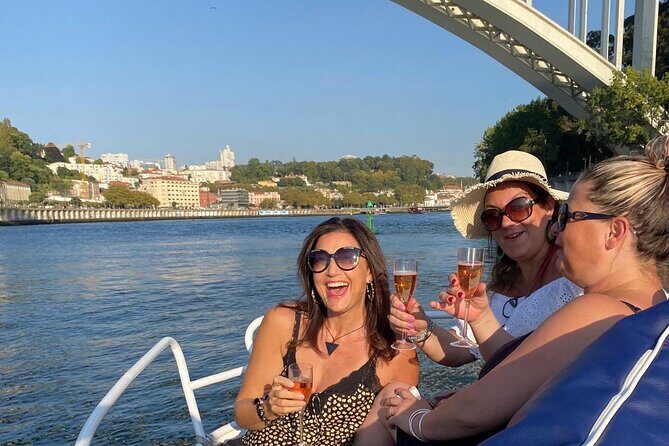
- Max 7 people on board: more room for questions, fewer elbows, and a calmer feel than bigger boats.
- Port tasting with thoughtful pairings: you don’t just sip; you taste with food that changes what you notice in the wine.
- Clérigos Tower’s 225 steps: a real climb, but it pays off with sweeping views over Porto and Gaia.
- UNESCO Serra do Pilar Monastery: circular church and cloister design, with military-era context that makes the stop click.
- D. Maria Pia Bridge and Eiffel-era engineering: iron architecture you can actually see, not just read about.
- Douro Estuary bird habitat to the Atlantic mouth: nature scenery at the end of the route, before the water opens up to the ocean.
The vibe: small-boat Porto that feels like locals showing off
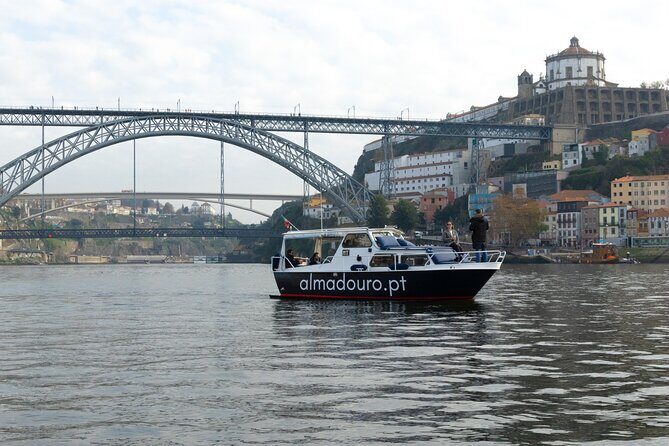
This experience is built around a simple idea: Porto is best when you see it from multiple angles. You start near Afurada and then work your way through classic Porto and Gaia landmarks before heading out on the water, so you get both the architecture and the river setting.
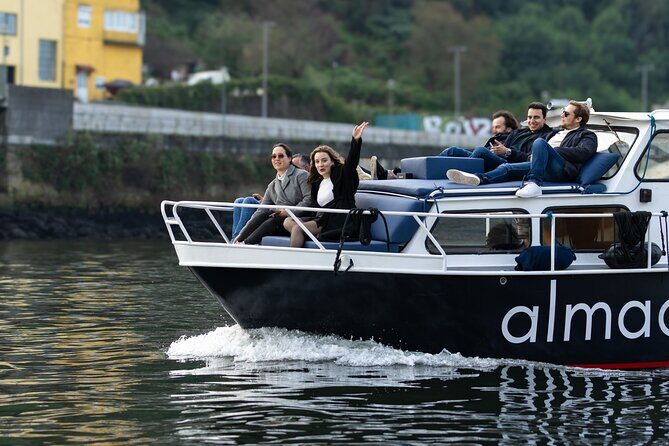
Because the group is capped at 7, the hosts can slow down for questions and still keep things moving. In the reviews, that’s a recurring theme: no scripted monotone, just stories and guidance as the scenery slides by. If you want a cruise where you can actually talk and ask what you’re seeing, this format makes it easy.
More Douro River cruises in the Douro Valley & northern Portugal

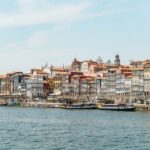
Marina da Afurada start: the traditional working-port feeling
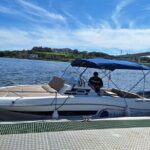
Your tour begins at Marina da Afurada (R. da Praia 430, 4400-554 Vila Nova de Gaia). This matters because Afurada is one of those areas where Porto isn’t just postcard buildings. It’s a working waterfront vibe, and it helps you get into the river mindset fast.
From here, the itinerary mixes walking and viewpoint stops. Plan on comfortable shoes, because even with a short total time, you’ll be moving between the different highlights. The good news: the time on each stop feels designed to keep you from losing the day to one location.
Clérigos Tower: 225 steps for Porto and Gaia views
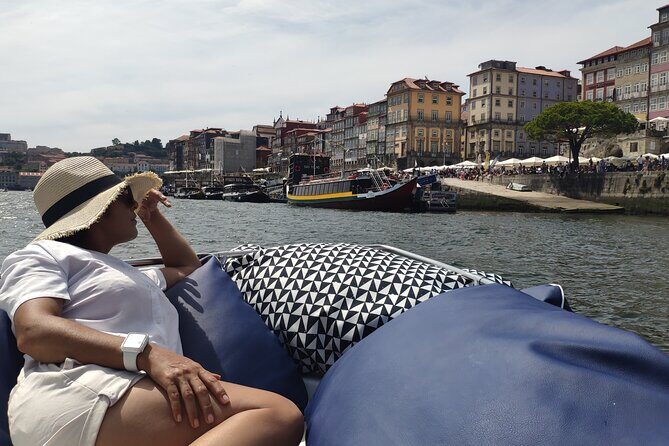
One of the best early moments is the stop at Torre dos Clérigos. It was designed by Italian architect Nicolau Nasoni and completed in 1763, and it’s more than 75 meters tall. It also served practical roles over time, including acting as a landmark for vessels and as a strategic point during military events.
The visit includes a climb of 225 steps to reach the top. That’s not a tiny stair situation, so treat it like part of the exercise part of your day, not an optional detail. The payoff is panoramic views over both Porto and Gaia, and it’s one of those vantage points that makes the rest of the itinerary feel connected.
Dom Luís I Bridge and Ribeira: postcard Porto in two steps
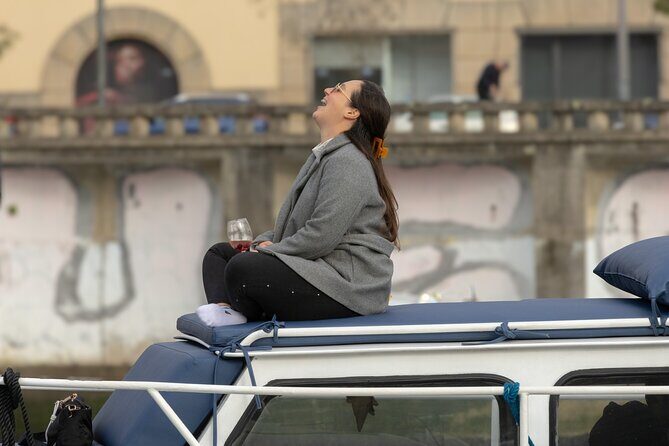
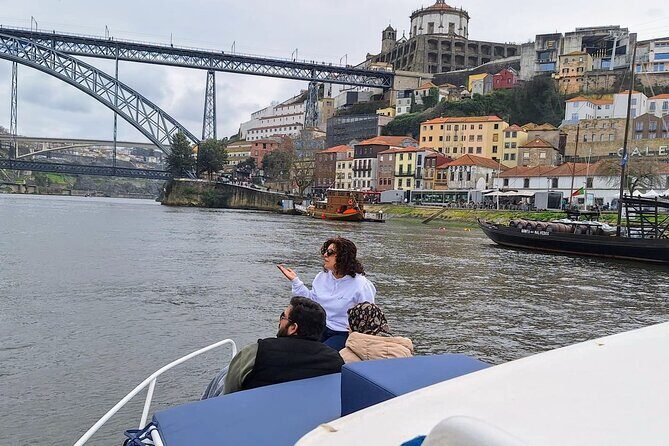
Next up, you hit Dom Luís I Bridge, the famous metal bridge that connects Porto and Vila Nova de Gaia across the Douro. It has two decks and was built between 1881 and 1886, so it’s deeply tied to how modern Porto views its river.
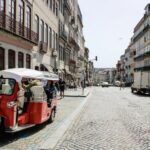
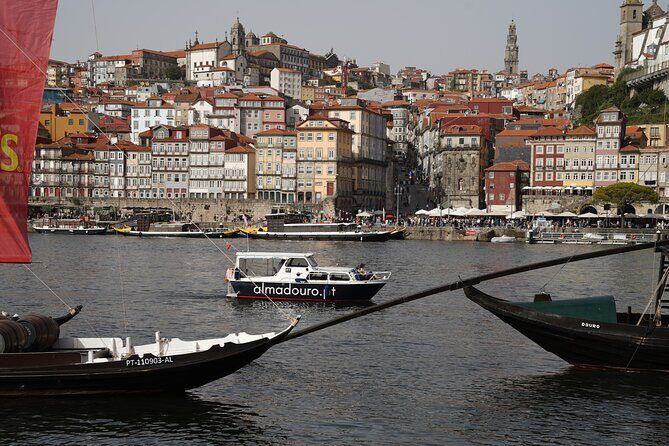
There’s time here to take in the structure (and get your photos), with a 30-minute stop noted for this segment. After that, the Ribeira stop is the next obvious win. Ribeira is the area people call the city’s most classic postcard: the color, the life, the layered history. Even if you’ve seen pictures already, standing in the area helps you understand why it’s such a magnet.
Tip: treat Ribeira as a quick reset for your eyes. You’re about to head to more structured architecture, and this stop gives you texture before the engineering and religious sites take over.
Serra do Pilar Monastery: UNESCO circular design with a military past

Serra do Pilar Monastery is an austere 17th-century church that’s been classified as a UNESCO World Heritage Site since 1996. What grabs your attention right away is the circular plan and the imposing hemispherical vault. There’s also a balcony and lantern on top, and inside you’ll see gilded and white carved details that feel intentionally dramatic.
The site is also described as a National Monument, and it includes a cloister that’s just as distinctive: a circular layout with a central rib supported by 36 Ionic columns. The architectural idea is tied to Mannerist design and is noted as a unique example in Portugal for having both the church and cloister in circular plan, with influences traced back to civil architecture.
Then you get the historical twist that makes this stop more than pretty walls. The location mattered during the Napoleonic invasions in 1809 and later during the liberal struggles (1832–33) when it served as a military base. Elevated to fortress status, it was later converted into military barracks. That context makes it easier to understand why the monastery looks built for endurance rather than comfort.
Practical takeaway: even if you’re not a big church person, this stop rewards you because the architecture and the history are connected.
More Six Bridges cruises in the Douro Valley & northern Portugal


D. Maria Pia Bridge: Eiffel-style iron, repurposed railway glory
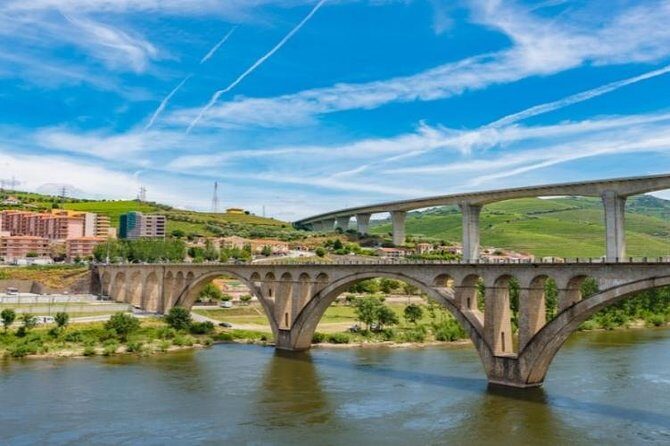
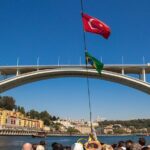
Another highlight is the D. Maria Pia Bridge. This one is a railway infrastructure that carried Portugal’s Northern Line over the Douro between Porto and Gaia. It was inaugurated on November 4, 1877 and later closed on June 24, 1991, replaced by the Ponte de São João.
This bridge is considered one of the greatest masterpieces by engineer Gustave Eiffel, and it’s noted as having been the largest iron arch in the world at the time of its inauguration. It’s also classified as a National Monument since 1982.
What I like about bringing this into a tour like this is that it gives you a different way to read the river. You stop thinking only about ships and sunsets and start noticing how the Douro shaped engineering, transport, and even the urban layout between Porto and Gaia.
Douro Estuary to the Atlantic: birds, salt marsh, and a big ending
As the route continues, you reach the Douro Estuary Local Nature Reserve. It covers 66.35 hectares on the south bank near Afurada, and the area includes Cabedelo and São Paio bay, where you can find a salt marsh.
This is the nature break that keeps the cruise from becoming only architecture. The reserve protects natural values like bird life, and it’s positioned along a migratory corridor called the East Atlantic Route. So if you like watching birds, this is the segment where you can slow down and look without needing to climb anything.
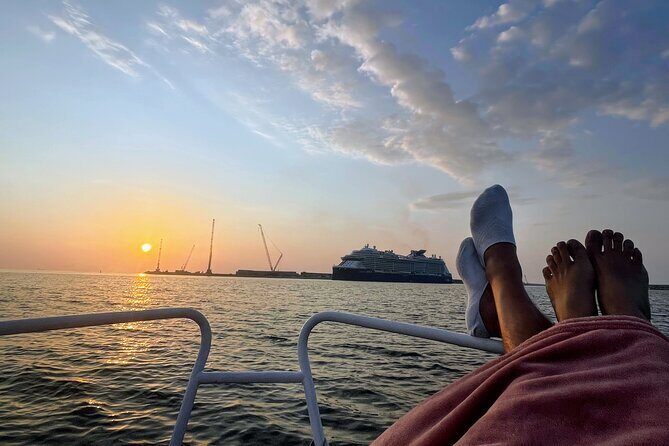
The experience finishes at the mouth of the Douro, right by the Atlantic Ocean. Ending near the ocean is a smart move for a short tour: it gives you that sense of space and change in scenery without demanding a full-day excursion.
Port tasting: why Nadia and Paulo’s approach works
The whole experience is anchored by 4 port wines (and the title notes up to a maximum of 7). This is where the hosts’ style really matters.
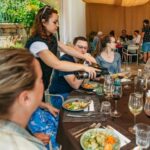
In the reviews, people consistently highlight how Nadia pairs the different ports with foods that bring out flavor in each pour. That pairing is the difference between tasting and learning. You’re not just drinking; you’re comparing and noticing how sweetness, acidity, and aromas shift when you add bites.
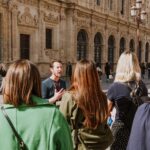
The hosts are also described as warm and story-driven, with anecdotes tied to the landmarks as you move along. Instead of long lectures, you get just enough explanation to make the sights click. One review even calls out that they tell the stories in a way that makes it feel alive, not boring.
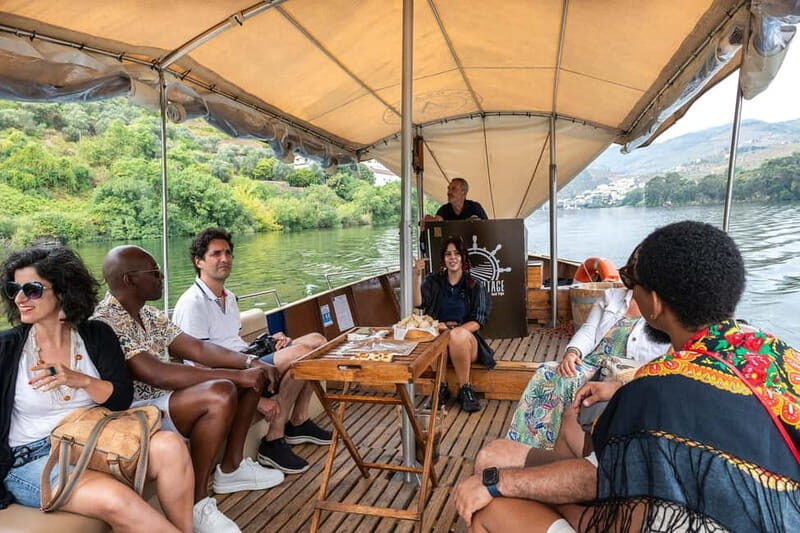
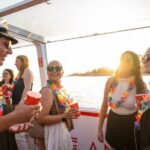
Extra comfort touches show up too. Multiple reviews mention blankets when it gets colder, and that small detail turns a potentially chilly evening into something cozy. Drinks and food snacks are also repeatedly mentioned, including snack platters like cheese and charcuterie, plus sangria and wine alongside the port tasting.
Timing note: some people book the later slot for sunset. If clouds roll in, the views can be different, but the tour still runs with the same structure. Either way, you’ll still end out near the water and ocean.
Comfort, pacing, and who this works for
This is a 2-hour experience, and it’s short on purpose. That makes it ideal for first-timers who want key Porto and Gaia highlights without stacking up multiple tickets and long transit gaps.
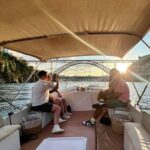
The max group size matters. With up to 7 travelers, you get space on the small boat and more direct attention. In one review, the tour even felt close to private with only a couple onboard. You shouldn’t count on that, but small-group tours often deliver that “more personal than you expected” feeling.
Who it’s best for:
- Couples who want romance plus structure
- Food and wine lovers who like tasting with context
- Families with kids who can handle a tower climb and a short cruise
- Anyone who finds big boats a bit chaotic
Who should think twice:
- Anyone with reduced mobility, since the climb to the tower involves a lot of steps and the tour is not marked as suitable for that
Price and value: what you’re really paying for
At $72.41 per person for a 2-hour outing, the price looks straightforward until you tally what’s included. You’re paying for (1) the small-group guided experience, (2) the port tasting portion with multiple pours, and (3) the chance to see several major Porto and Gaia landmarks in one run.
A big value perk is that you’re not piecing this together yourself. Instead of booking a bridge-view cruise and then booking a separate port tasting, you get both in a single itinerary that flows from the city to the river. And since you’re capped at 7, you’re less likely to feel like a number being shuffled from one stop to another.
Weather is the other value factor. The tour notes that it requires good weather, and if it’s canceled for poor weather you’ll be offered another date or a full refund. That’s good risk management for a short, outdoors-heavy experience.
So, should you book this Douro 6 Bridges and port tasting cruise?
If your goal is to see Porto and Gaia from land and water, taste port with real explanation, and keep your day to a manageable 2 hours, I’d book it. The combination of Clérigos Tower, Serra do Pilar, major bridges, and then the Douro ending at the Atlantic mouth is a strong mix.
If you hate stair climbs or you can’t manage uneven movement around a marina and viewpoints, you’ll likely feel the strain. In that case, look for an option that reduces walking and skip the tower requirement.
Finally, if you’re on a tighter schedule and want one experience that hits both the architecture and the food-and-wine side of Porto, this is a very solid choice. Bring your walking shoes, a layer for cooler river air, and expect a tour run with care by Nadia and Paulo rather than a factory-style script.
FAQ
Where does the tour start?
The tour starts at Marina da Afurada, R. da Praia 430, 4400-554 Vila Nova de Gaia, Portugal.
How long is the experience?
The experience lasts about 2 hours.
Is this tour offered in English?
Yes. The experience is offered in English.
How many people are on the tour?
The tour has a maximum of 7 travelers.
Does it include port wine tasting?
Yes. It’s listed as a Douro cruise with 6 bridges and 4 port wines (with a maximum of 7).
Is it suitable for reduced mobility?
It’s not recommended for reduced mobility.